
Japanese Community in Singapore: Social Clubs and Cultural Groups


For many Japanese expats, Singapore feels familiar surprisingly quickly.
The trains run on time. Streets are clean. Public services are efficient. Even the pace of daily life shares some similarities with what many people are used to back home.
At first, that familiarity is enough.
A new job keeps you busy. A new apartment needs furnishing. Weekends are spent exploring hawker centres, shopping districts, and neighbourhoods that colleagues recommend.
Then, somewhere between the third month and the first year, something changes.
You begin looking for people rather than places.
Not because Singapore is difficult to live in. Quite the opposite. Most Japanese residents adapt fairly smoothly. But living abroad has a way of creating small moments where familiar cultural connections suddenly become important.
It might be wanting to celebrate a seasonal Japanese event. It could be looking for other parents who understand the Japanese school system. Sometimes it is simply the comfort of speaking naturally without having to explain every cultural reference.
The good news is that Japanese residents are not starting from scratch when they arrive in Singapore.
In fact, the Japanese community here is one of the oldest and most established expatriate communities in the country. Over decades, a network of organisations, schools, cultural institutions, and social groups has developed around it.
For newcomers, that means there are already plenty of doors open.
The challenge is simply knowing which one to walk through first.
Japanese Association Singapore: Often the First Stop for New Arrivals

If you ask long-term Japanese residents which organisation has had the biggest impact on the community, many will immediately mention the Japanese Association, Singapore (JAS).
Founded in 1915, JAS has been serving the Japanese community for more than a century. That alone says a lot about its role in Singapore.
What makes JAS interesting is that it is difficult to define with a single label.
It is not just a social club.
It is not just a cultural organisation.
And it is certainly not only for business professionals.
Instead, it functions as a community hub where people from different backgrounds come together.
Families participate in community activities. Professionals join networking and interest groups. Children attend events designed for younger members. Retirees often find opportunities to remain socially active.
Throughout the year, JAS organises cultural celebrations, language-related activities, hobby clubs, sports programmes, workshops, and community gatherings.
For someone who has recently relocated to Singapore, joining JAS is often one of the fastest ways to begin building a local social network.
The reason is simple.
When hundreds of Japanese residents participate in the same organisation, connections tend to happen naturally.
Japanese Chamber of Commerce & Industry Singapore: Where Business Relationships Begin
Not every expat arrives in Singapore looking for social activities.
Many arrive because of work.
Executives, entrepreneurs, managers, and corporate professionals often find themselves searching for business connections long before they think about social circles.
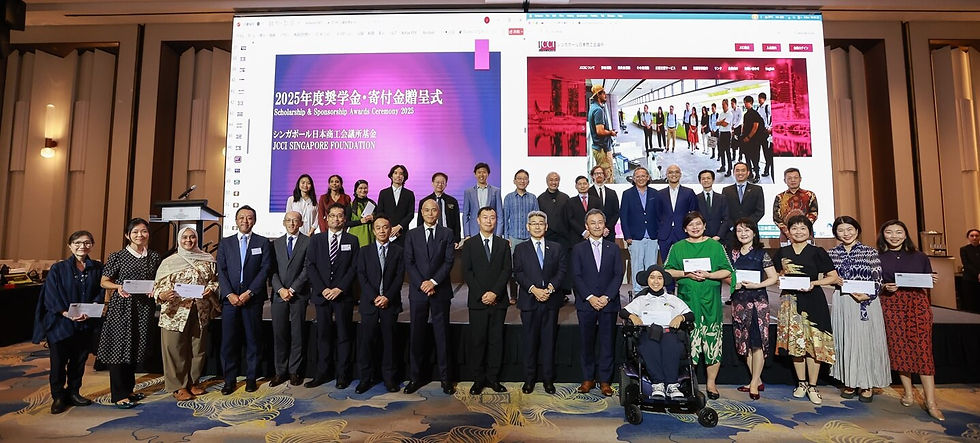
This is where the Japanese Chamber of Commerce & Industry Singapore (JCCI Singapore) plays a major role.
JCCI is one of the most influential Japanese business organisations in Singapore. It represents a large number of Japanese companies operating across industries such as manufacturing, technology, finance, logistics, and professional services.
At first glance, JCCI may seem focused purely on business.
And to a large extent, it is.
The organisation regularly hosts industry discussions, economic briefings, networking sessions, seminars, and corporate events.
Yet something interesting happens in expatriate communities.
Professional relationships often evolve into personal friendships.
A business contact becomes a golf partner.
A fellow entrepreneur becomes a family friend.
A networking event leads to introductions that extend well beyond work.
For Japanese professionals who are new to Singapore, JCCI frequently becomes the gateway to both business and community life.
Japanese School Singapore: More Than Just Education

For families relocating with children, community often develops through entirely different channels.
In many cases, it starts at school.
The Japanese School Singapore (SJS) serves thousands of students and has long been an important institution for Japanese families living abroad.
From an educational perspective, the school helps students continue their studies within a familiar academic framework.
But its impact goes beyond the classroom.
Parents meet through school events.
Children develop friendships that lead to family gatherings.
Community activities bring together households from different industries and backgrounds.
Over time, many families build their closest Singapore friendships through connections that began at school.
Ask long-term Japanese parents how they met their social circle, and there is a good chance the answer involves a school event somewhere along the way.
What starts as a conversation during a parent meeting often develops into years of friendship.
Japan Creative Centre: A Cultural Home Away From Home

Not every community connection revolves around work or family.
For some people, culture is the strongest link to home.
The Japan Creative Centre (JCC), operated by the Embassy of Japan in Singapore, plays an important role in preserving and promoting Japanese culture within Singapore.
Many newcomers discover JCC while looking for exhibitions, workshops, or cultural programmes.
What they often find is something much broader.
The centre regularly hosts art exhibitions, film screenings, lectures, traditional cultural demonstrations, educational events, and community programmes.
Some attendees are Japanese residents.
Others are Singaporeans with an interest in Japanese culture.
Students, artists, professionals, and families all regularly attend events at the centre.
This creates an environment where conversations happen naturally and where cultural appreciation becomes a bridge between different communities.
For Japanese expats who miss certain aspects of home, JCC often provides a welcome sense of familiarity.
Japanese Sports and Hobby Clubs: Where Friendships Form Naturally
One thing many experienced expats eventually realise is that friendships rarely develop during formal networking sessions.
More often, they develop while doing something enjoyable together.
The Japanese community in Singapore has a wide range of hobby-based and recreational groups.
Golf remains especially popular, particularly among business professionals.
Weekend rounds often become social gatherings as much as sporting activities.
Tennis groups, cycling communities, running clubs, photography circles, language exchange meetups, and various interest-based clubs can also be found throughout Singapore.
The beauty of hobby groups is that nobody feels pressured.
People attend because they enjoy the activity itself.
The friendships happen almost by accident.
Many long-term residents say some of their closest friends in Singapore came not from formal organisations but from shared hobbies.
Embassy-Supported Events Bring the Community Together
While many people associate embassies primarily with administrative services, the Embassy of Japan in Singapore also contributes to cultural and community engagement throughout the year.
Various celebrations, cultural programmes, educational initiatives, and public events help strengthen ties among Japanese residents while introducing Japanese culture to wider audiences.
These events often attract a mix of long-term residents, newly arrived expats, business professionals, students, and local Singaporeans.
For newcomers, they provide a low-pressure environment to meet people and learn more about the community.
Sometimes attending a single cultural event can lead to introductions that open doors to entirely new social circles.
Online Communities Have Changed the Way Newcomers Connect
Twenty years ago, finding fellow Japanese residents usually required personal introductions or attending community events.
Today, things are much easier.
Facebook groups, online forums, messaging communities, and professional networking platforms have become valuable resources for newcomers.
Questions about schools, housing, healthcare, shopping, and daily life are often answered within hours.
These platforms are particularly useful during the first few months after arriving.
However, most experienced expats eventually come to the same conclusion.
Online communities are excellent for information.
Real-world communities are where friendships actually happen.
The two work best together.
Looking Beyond the Japanese Community
An interesting pattern emerges among many Japanese residents who stay in Singapore for several years.
They begin with Japanese organisations and communities.
Then gradually expand their social circles.
Singapore's international environment makes this relatively easy.
Many Japanese professionals and families eventually participate in broader expatriate communities alongside Japanese organisations.
Groups such as the Singapore Expat Association (SEA) provide opportunities to meet people from different nationalities, industries, and backgrounds.
Rather than replacing Japanese community involvement, these wider networks often complement it.
People maintain strong cultural connections while gaining a broader international perspective.
Finding Your Place Takes Time
One misconception about expatriate life is that social circles appear automatically.
In reality, even in a community as established as Singapore's Japanese community, meaningful connections take time.
The people who seem well connected today usually started exactly where every newcomer starts.
They attended one event.
Joined one organisation.
Accepted one invitation.
Showed up to one gathering where they knew nobody.
Then they did it again.
And again.
Over time, familiar faces became friends.
Friends introduced other friends.
A foreign city gradually became more familiar.
The Japanese community in Singapore is large, welcoming, and remarkably well-organised. The organisations already exist. The social circles are already there. Often, the only thing standing between a newcomer and a thriving community is the decision to take that first step and get involved.
Need more help and advice, email us today at members@expatassociation.com or join us now at https://www.expatassociation.com/join-us and be part of something meaningful.


Comments